- The RBA minutes lean hawkish, so borrowing costs may stay high.
- The Aussie is still weak, so US dollar invoices can cost more in Australian dollars.
- Check your cost per unit at today’s rate and at a weaker rate.
On 13 October 2026, the RBA’s September minutes showed a central bank focused on inflation and worried that a weaker Australian dollar adds imported price pressure. The Aussie still traded near 0.6976 against the US dollar. For food importers, that can mean dearer borrowing and higher Australian dollar costs on US dollar orders.
Update, 21 October 2026
Update, 21 October 2026: Australia’s September jobs report came out on 15 October. It showed 39.3K jobs lost, against a forecast gain of 20K. Unemployment rose to 4.7%, above the RBA’s own 4.5% forecast for the December quarter. FXStreet reported that the odds of an RBA hike in November fell from about 26% to 15%. The December odds fell from 62% to 43%.
By 16 October, markets expected the RBA to leave rates unchanged at its 2 to 3 November meeting. The September minutes still say the Board is open to raising rates again if needed. Nothing is confirmed, so more rate rises are not ruled out.
The Aussie fell to about 0.6894 against the US dollar on 15 October, then traded near 0.6941 on 16 October. For importers, borrowing costs may be less likely to climb further, but US dollar invoices still cost more Australian dollars than a few weeks ago. Check your cost per unit at the current rate and at a weaker one. The Fed is also still expected to hold on 27 to 28 October, with a December hike priced in.
The Reserve Bank of Australia (RBA) minutes released on 13 October read hawkish, yet the Australian dollar stayed weak, FXStreet reported. For RBA interest rates and importers, that is a double squeeze. Money to hold stock may stay dear, and US dollar bills can cost more Australian dollars.
What did the RBA minutes say?
The minutes show a central bank that is mainly worried about inflation. Analysts at Commerzbank said they make clear how strongly the RBA’s focus has shifted towards inflation. FXStreet said the minutes build the case for more rate hikes.
A second FXStreet report on the same minutes listed new upside risks to inflation since August. These include price pressure linked to the AI boom and oil prices pushed up by the Middle East conflict.
The signals are not all one way. The minutes also noted that a bigger-than-expected fall in house prices hints that financial conditions could be quite tight.
Why does a weak Aussie dollar lift import costs?
A weaker Aussie dollar means each US dollar costs more Australian dollars. If your supplier quotes in US dollars, your bill can rise even when the supplier’s price has not changed.

The RBA raised this point itself. It expressed concern that a weaker Australian dollar could add to price pressures through imported inflation.
On 13 October the Aussie was up 0.27% to near 0.6976 against the US dollar. The US Dollar Index (a gauge of the US dollar against six major currencies) was near 102.27. FXStreet also described the US dollar as near its highest level since April 2025.
A small move in the US dollar against the dong does not fix this for Australian buyers. VnExpress reported on 30 September that the US dollar dipped against the dong but was on track to end September higher against major peers.
How do RBA interest rates and importers connect?
Higher interest rates make it dearer to borrow money to buy and hold stock. That is a general rule, and the size of the effect depends on your own loan or finance terms.
The currency and the rates can also feed each other. Commerzbank said that if other central banks raise rates more than expected, the RBA could feel pushed to tighten further to prevent too much fall in the Aussie.
On the US side, traders largely expect the Federal Reserve to hold at its next meeting, while pricing in another hike for December. Three dates to watch:
- US inflation (CPI) data: due Wednesday 14 October.
- Australian jobs data: due Thursday 15 October. The forecast is 20K new jobs and unemployment steady at 4.6%.
- The Fed’s next meeting: a hold is expected, with a December hike priced in.
Your freight bill can move too. Our post on the Maersk peak season surcharge to Australia covers that cost.
What this means for you
- Food brands: A weak Aussie raises the Australian dollar cost of each US dollar order. Dearer borrowing also makes extra stock costlier to carry.
- Grocers: House brand lines bought in US dollars can cost more per unit before your next shelf price review. Check your margin at today’s rate.
- Restaurants and caterers: Your distributors face the same currency and finance costs. Sauces and ingredients may be repriced as those costs flow through.
- Importers: You carry both risks, currency on the invoice and interest on the stock. Decide whether to fix your rate or keep waiting.
What to do next
Work out your cost per unit at today’s rate and at a weaker rate, then ask your bank or supplier about fixing the exchange rate. Our posts on locking in an AUD VND rate and when to pay your Vietnam supplier explain the options.
We work with food brands in Australia, the US, Canada, the EU and the Middle East. If you are weighing up a Vietnam-made product, we can show how we work with food brands, or you can start a project.
Written 14 October 2026. This is general information, not financial advice. Check the official source, your bank or a licensed customs broker for your own product and situation.
Questions about this topic
Will RBA interest rate rises make imported food dearer?
They can. Higher rates raise the cost of borrowing to hold stock, and a weaker Aussie raises the cost of US dollar invoices. The RBA minutes lean hawkish, but no change is confirmed, so check your own finance terms.
Why does a weak Australian dollar raise import costs?
A weaker Aussie buys fewer US dollars. If your supplier quotes in US dollars, the same invoice costs more Australian dollars. The RBA minutes themselves flagged imported inflation as a concern.
Which dates matter for the Aussie dollar this week?
US inflation (CPI) data is due on Wednesday 14 October. Australian jobs data follows on Thursday 15 October. Both can move the currency and rate expectations.
Sources
- Australian Dollar remains weak despite hawkish RBA minutes (FXStreet, 2026-10-13)
- Australian Dollar remains steady following RBA September Meeting Minutes (FXStreet, 2026-10-13)
- Dollar slips against dong (VnExpress International, 2026-09-30)
- Australian Dollar crumbles as job losses shatter RBA rate hike hopes (FXStreet, 2026-10-15)
- Australian Dollar pares gains as US Dollar steadies, RBA hike bets ease (FXStreet, 2026-10-16)
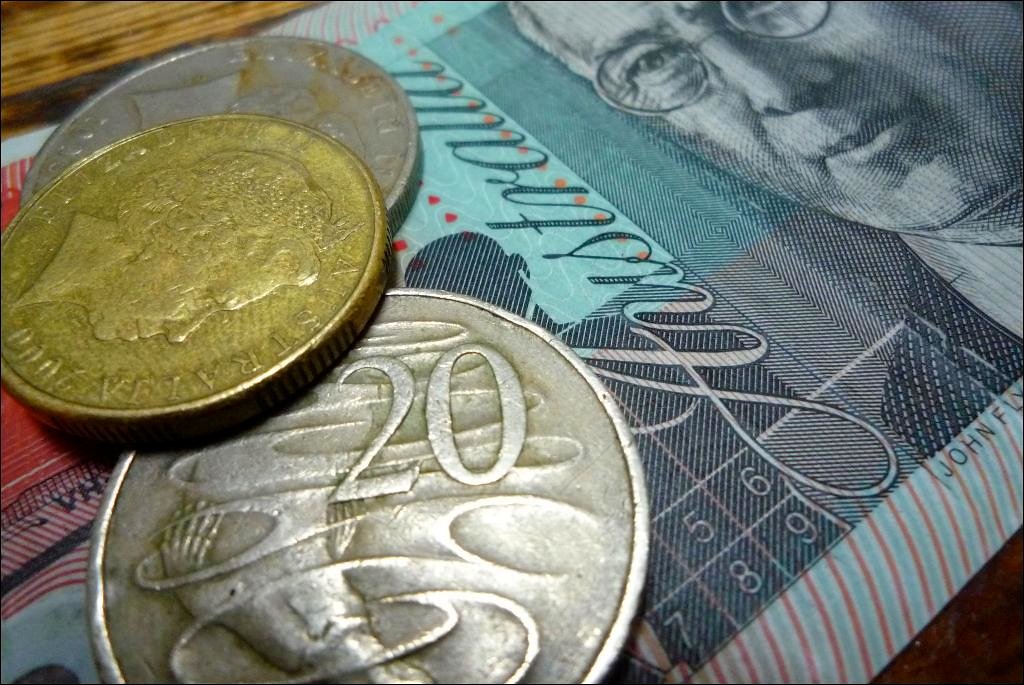
Cover photo: Australian Coins and Notes Macro by martinhoward, CC BY 2.0.


