- The Aussie fell after jobs dropped by 39,300 in September, and a November rate rise now looks unlikely.
- A weaker Aussie raises the Australian dollar cost of any stock priced in US dollars.
- Rates are less likely to rise soon, but the RBA cash rate is still 4.60%, so plan finance with care.
The Australian dollar fell 0.4% to US$0.6945 on 15 October 2026 after Australian employment dropped by 39,300 in September. Traders cut the chance of an RBA rate rise in November to around 9%. A weaker dollar can lift the cost of US dollar priced imports, while borrowing costs look less likely to rise soon.
The Australian dollar fell on Thursday 15 October 2026 after a surprise drop in jobs, and traders cut their bets on another interest rate rise. The Australian dollar jobs data cuts two ways for food brands that import stock. A softer dollar makes US dollar priced goods cost more, while a lower chance of rate rises eases pressure on stock finance. Importers, grocers and restaurant buyers are all affected.
What did the Australian dollar jobs data change?
The Aussie slid 0.4% to US$0.6945 after Australian employment fell 39,300 in September, against a forecast rise of 20,000. The jobless rate stayed at a five-year high of 4.7%. The figures were reported by Reuters via Business Recorder.
Rate rise bets fell sharply. The chance of a November hike dropped to around 9% from 32%, and a December move to 28% from 56%.
The US dollar also played a part. A hot reading on US core inflation had lifted the greenback overnight. FXStreet reported the Aussie hit a one-week low against the US dollar.
What does a weaker Aussie dollar mean for import costs?
It raises the Australian dollar cost of anything priced in US dollars, which can include freight charges and some supplier quotes.

The Aussie had peeled away from a top of US$0.7014 overnight. Reuters also noted a recent 13-week trough of US$0.6904. So the dollar is not far from its recent lows.
When you review a quote, check these points:
- Which currency the quote is in, US dollars, Vietnamese dong or Australian dollars.
- When the price is fixed, at quote, at order or at payment.
- Which costs move with the exchange rate, such as freight and surcharges.
- How much margin you keep if the Aussie falls further.
For the payment side, see when to pay your Vietnam supplier and how to think about locking in a rate.
Will borrowing costs for stock finance change?
Rises look less likely soon, but rates are not falling. The RBA cash rate target is 4.60%, effective 30 September 2026. The RBA has lifted rates by 100 basis points this year.
Markets still price in 17 basis points of hikes by May next year. One economist said the jobs result should strengthen the case for keeping interest rates on hold.
Your own lender sets your rate, so ask what applies to your facility. Two dates matter. Annual inflation was 4.0% in the August monthly figure, with the next update on 28 October 2026, and the next cash rate update is at 2.30 pm on 3 November 2026. The RBA also released its Annual Report 2026 on 15 October. For background, read what a weak Aussie means for importers.
What this means for you
- Food brands: Your landed cost per unit may rise if supplier or freight costs are in US dollars. Test your margin at a lower Aussie rate before you set shelf prices.
- Grocers: House brand and imported lines may cost more to land. Check supplier price lists before you commit to Christmas ranges.
- Restaurants and caterers: Imported sauces and noodles from your distributor may edge up. Ask how long current prices hold.
- Importers: You carry the exchange rate risk between order and payment. Less pressure on rates helps stock finance, but the dollar can still move against you.
What to do next
- List every supplier and freight quote by currency.
- Decide which orders to fix in price now and which can wait.
- Ask your lender or broker about stock finance before 3 November.
- Watch the 28 October inflation figure and the 3 November RBA update.
This is general information, not financial advice, so check your own position with your bank, accountant or a licensed customs broker. Written 16 October 2026.
If you are planning a new product, see how our services work or start a project, and we will quote a factory price or one landed price per unit delivered to your door in Australia, your choice.
Questions about this topic
Why did the Australian dollar fall after the jobs data?
Australian employment fell by 39,300 in September, much worse than the forecast rise of 20,000. That cut the chance of another RBA rate rise, which made the Aussie less attractive to traders. The Aussie slid 0.4% to US$0.6945.
Does a weaker Australian dollar make imported food more expensive?
Yes, if your supplier or freight quote is in US dollars. It takes more Australian dollars to pay the same US dollar bill. Check the currency on each quote and when the price is fixed.
Will the RBA raise interest rates in November?
Markets now see it as unlikely. After the jobs data they cut the chance of a November rise to around 9% from 32%. The RBA cash rate is 4.60%, and its next cash rate update is on 3 November 2026.
Sources
- Australian dollar stung as jobs blow slashes chance of rate rise (Business Recorder (Reuters), 2026-10-15)
- Australian Dollar extends jobs data-led slump; hits one-week low despite weak USD (FXStreet, 2026-10-15)
- Reserve Bank of Australia (Reserve Bank of Australia, 2026-10-15)
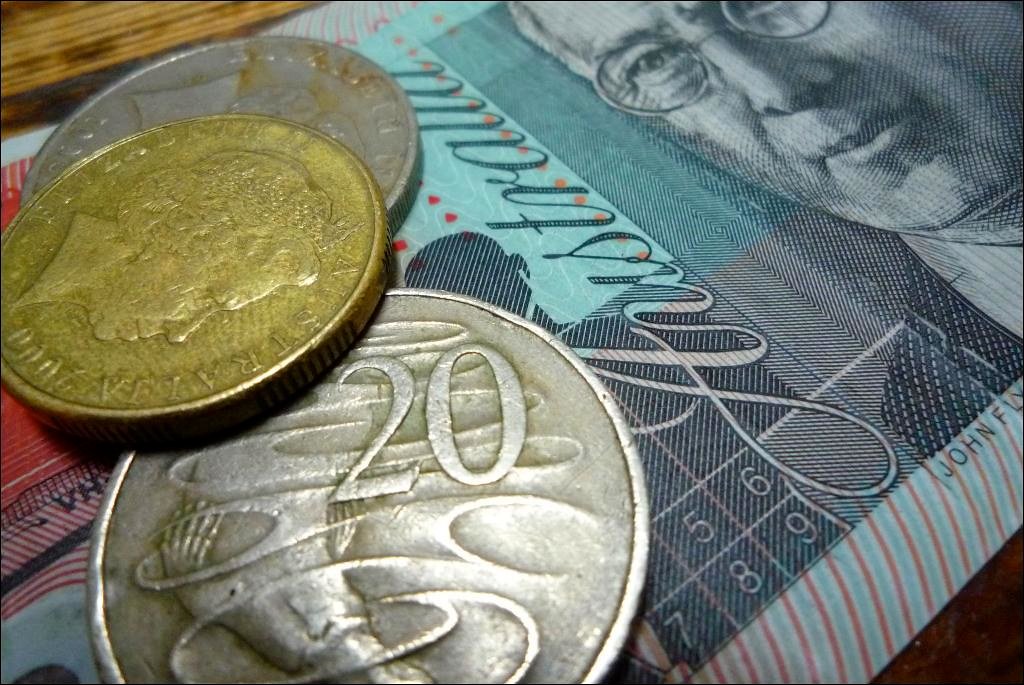
Cover photo: Australian Coins and Notes Macro by martinhoward, CC BY 2.0.


